Showing posts with label Books for the brain. Show all posts

Saturday, February 27, 2016

Read: Epigram Books


We've not had any homeschool lessons for the past few weeks, however, we've still been doing lots of reading at home! These days, Junior J loves rummaging through our shelves, and picking up a few titles a day to read. He's still very much into picture books, and hasn't really transitioned into chapter books. However, I'm glad that he's enjoying reading so much. 

Lil J used to be so fidgety that he couldn't sit through a book at all! However, these days, he's also turning into a bookworm. He can't actually read independently, but he frequently asks us to read to him, and likes flipping through books on his own. Small J loves being read to, so I think we're headed to becoming a family of bookworms. 

These days, I've been trying to include more local publications in our children's book collection. I think that our local kid lit scene has some way to go with regards to quality, however, I've observed more new authors and interesting reads coming up these days. Whatever the case, we do hope to support our home-grown authors, as well as introduce the kids to our local culture through books. Here are some titles from Epigram Books that we've been enjoying these days:

This series of stories (of currently six titles) feature a pair of pandas (BoBo and ChaCha), and their adventures around Singapore. I love how their adventures allow us to explore Singapore, from eating rojak in Toa Payoh to celebrating Chinese New Year, and the boys enjoy and identify with the pandas' experiences. . The stories also try to teach certain values, such as the importance of caring for and helping friends. I do appreciate how the author tries very hard to give the books a local flavour, to the extent of including a certain amount of Singlish in the conversations, however, I find it's use a little stilted and odd at times. However, the amount of Singlish used is rather minimal, and the kids certainly love the stories. Small J is a huge fan, because he is just crazy about pandas! 


:: Jack and Jill at Bukit Timah Hill, by Gwen Lee
This was quite a refreshing read, since it is a collection of nursery rhymes with a local twist! The boys were able to relate better to these rhymes, since they have familiar local elements in it, such as various food and landmarks. I loved how it introduced bits of our culture within the rhymes, such as traditional games like capteh and five stones.


:: Hurry Up, Slow Down, by Isabel Minhós Martins
This isn't a local book per se, and is translated from the original Portugese version as part of Epigram's "Stories from Around the World" series. While not written by a local, this was the book that I identified with the most, with it's focus on the mixed messages children receive about time:

"Outside, time passes through a machine that counts the seconds and marks the days without mistakes. Inside, clocks do not bother to count. They slow down, distracted, when there is too much to do. They hurry up when there is no time to waste."


Simple, doodle-like illustrations enhance the running monologue of questions and instructions that run through the book. I found myself smiling as I flipped through the pages, since these were things I have been guilty of barking at my kids as we rushed through our day!


Yet the book has a lovely ending (I won't spoil it for you!), and I think the boys could relate to this book. The cursive penmanship that meanders through the book is a perfect match for the bold pictures, however, emerging readers may find it hard to decipher the text, so this book is best enjoyed as a read-aloud.


I've noticed that Epigram has recently added a few more titles to this series of books from around the world, and I'm hoping to check out more of them (along with other new local titles) since they look pretty promising. Here's to more local publications on our shelves!

PS: We were given some of the aforementioned titles for purpose of this review. No monetary compensation was received, and all opinions are my own.

Thursday, July 16, 2015

Read: Exploring Art with children


I've been pondering about how to explore and talk to my boys about art. While we have our so called "Art Adventures" where we dabble in various crafty pursuits, we've yet to go into any serious exploration on artists and their works of art, save for a few co-op sessions where the kids listened to stories about the lives of various artists, and then did some art activities inspired by the artist's work.

I think part of this reluctance to start stems from my own struggle to understand and appreciate art. I enjoy visiting art museums, I love looking at beautiful works by artists, but I found I sometimes had difficulty comprehending certain art works or art forms. Certain pieces of modern art stumped me: why on earth would people actually pay 43 million for a canvas that was painted predominantly blue, something that my kid could probably easily do?

Then while browsing online, I chanced across this video of a talk by Alain de Botton, on art as therapy:


(I've embedded the video here, but if you do not have the time to watch it, you can read an excellent summary over here.)

The purpose and psychological functions of art are introduced in the talk. While I didn't agree with the premise that art can save our souls, and provide inner wholeness (since we believe only God can do that), the examples he used to illustrate the functions of art were helpful in shaping my approach to viewing a piece of art. And being clear about that helped me to think about how I would explore this area with my own kids.

I find that when it comes to exploring art with children, we have the tendency to be "human doings" rather than "human beings". We lean heavily towards the experiential: we let them play at children's exhibits at the art museum, we teach them to paint "like Monet" or do versions of Van Gogh's "The Starry Night", we do Matisse paper cut-outs of leaves. There is a lot of copying of techniques and styles  (which sometimes makes me question if we actually take creativity out of the process of art). These things are totally fine, but I think we sometimes focus too much on the how-tos, and forget to talk about the whys: about learning more about the life of each artist, and why he painted the way he did, and why he chose to paint what he did. I think these are the questions we ideally should discuss with our children, to help them to understand the art around them.

Here are some books which I found were helpful for such discussions:

:: The Art Book for Children (Book One, and Book Two): 
Most art books for children tend to introduce art by periods or styles, and tend to include mainly technical details such as when and where the artist lived, and the media he/she used. I found this book's approach quite a refreshing change, since it introduces various works of art mainly through asking questions: What do you think he was feeling? Why do the people look sad? What can you see?

While a little haphazard in its approach (since the works are introduced in no particular order), I thought it was an excellent springboard for discussing works of art with children.


:: The Anholt Artists Series
We especially love this series, because each book tells of a particular real-life incident in an artist's life that involves children. The books are great, because you get a glimpse into each artist's life, while being introduced to their passions and works of art.


:: Various children's biographies of artists: 
Reading more about each artist's life is helpful in understanding their work. Some of the biographies we particularly enjoyed include "A Splash of Red", "Edward Hopper Paints His World", "The Iridescence of Birds", and "Henri's Scissors".


:: Books introducing works of art through make-believe stories: 
While I prefer biographies that allow us to know more about the artist's life, sometimes books introducing various art works can also be a platform to spark off further research and discussion. Some books that can be helpful in this aspect include the Katie series, "BaBar's Museum of Art", and "You Can't Take a Balloon into the Metropolitan Museum".


We hope these recommendations are helpful, and if you'd like, do check out our recommendations for books on Science and Maths.

PS: This post contains affiliate links to Amazon.

Wednesday, June 24, 2015

Read: Learning math through stories


I've alway struggled with math, and didn't enjoyed learning it, since I didn't see how we could actually use most of the concepts taught in real life. Learning how to multiply and divide made sense, since you need that to calculate your grocery bills and figure out how to split your pizza between four people. But differentiation? Complicated formulas that were used, just to help you find that ever elusive x? All those didn't seem relevant or useful at all.

However, while I'm more or less done with my own math education, now I have to teach my own little boys the subject. Preschool math is still more or less straightforward, and still very useful in real life, so I have not found it hard to teach. After all, you can teach simple math anywhere: by counting leaves, during a trip to the supermarket, watching the numbers change as you go up and down in the lift.

I've shared how we've been using Math U See as our main curriculum for math, and that has been serving us well (even Lil J has started, and is on the Primer level since he loves counting and dealing with numbers). However, while the Math U See curriculum is great for establishing a good foundation in math, and the manipulatives enable kids to really understand the concepts, I find it pretty dry. There is a fair bit of practice involved, which is inevitable since you really need to practise working out those concepts to master them, but that means kids can get a little bored after awhile. So to spice things up a little and to help them to retain their interest in math, we've been looking at stories to supplement their learning in this area. Here are some books that the boys particularly enjoyed:


:: Life of Fred Mathematics: This is a series of books, written novel-style, featuring five year old Fred Gauss, who is a math professor at Kittens University. The stories are funny, since poor Fred is constantly making unwise decisions that land him into trouble! Each book covers mathematical concepts in a way that is relevant to real life, and also introduces various nuggets of general knowledge too.


As these are chapter books with some black and white illustrations, this is probably suitable for slightly older preschoolers aged 5 and up. Junior J loves the stories, and we've learnt many concepts by just reading one chapter a day together. (Sometimes, Lil J wants to sit in too!) Each book has approximately 18-19 chapters and each chapter ends with a "Your Turn to Play" section that allows kids to practise what they've learnt, with the answers printed on the next page for further discussion.


We've already finished the first seven books in the Elementary Math series (there are ten books for the first series), and will continue to use Life of Fred to supplement our math learning. I find that while Life of Fred is a very interesting way to learn math (Junior J even learnt to add four digit numbers together through this book, and is learning multiplication now), it cannot be used as a stand-alone curriculum as it does not provide enough structure or practice. Because of that, it complements the Math U See curriculum perfectly, and I've heard of quite a few homeschoolers using these two hand in hand to teach math. One warning though: these books are rather pricey. However, they are of good quality, and we figured it'll be an investment since a few kids would get to use them.

Life of Fred is not available in the libraries here, and while I purchased our copies locally, the distributer here is not longer selling the books. As such, these can only be purchased in the US, either directly from the publisher, or through Educents. Educents is having a sale on the series right now which is ending soon, and the books are now cheaper than if you buy direct from the publisher. Do note that you will need to arrange for your own shipping back to Singapore if you do purchase the books.


:: Sir Cumference series: This series of books introduces geometry through adventure stories featuring knights! Kids get to learn concepts such as area, perimeter, circumference, pi and radius, while reading these books with full colored illustrations.  Again, these are more suitable for those five and up, but the younger kids might just enjoy hearing the stories being read to them.

Source: Amazon

We've borrowed some of the titles from this series from the library (see here for details), and have also chanced on one book when we were digging amidst the second-hand books at Evernew Bookstore. That aside, you can purchase the books from Amazon here.


:: Books by Loreen Leedy: Loreen Leedy has written several books dealing with math concepts. Her stories are mainly told through comic book form with full-colour illustrations, and I find these are simple enough for four year olds to understand. We particularly liked "Measuring Penny", which introduces the concepts of measurements, as well as "The Great Graph Contest" which teaches kids how to draw various types of graphs to represent information.

Source: Amazon

Loreen Leedy's books can be borrowed from the library, or purchased from Amazon.


:: MathStart Series: These books are simple stories that are accompanied with full colour illustrations, which introduce various math concepts to younger children. The series is split into three levels, with the first teaching concepts such as comparing sizes, shapes, matching and sorting, the second introducing topics such as addition, subtraction, tallying and symmetry, and the third teaching topics like division, fractions and angles. The first level books are probably simple enough for 3 year olds to understand, and Lil J enjoys flipping through these books.


Source: Amazon

You can borrow some of the titles from the library, or purchase them from Amazon or locally at The Learning Store (Note: These may be slightly cheaper at The Learning Store, but only when they have a good warehouse sale. Otherwise, the prices are better on Amazon.)

I hope these recommendations might come in useful, and we'll share more titles in time to come as we explore specific math topics. Meanwhile, do check out our list of book recommendations for Science, or our Rave Reads folder on the FB page. Happy reading!

PS: This is not a sponsored post, and we are sharing these titles because we love them! However, this post contains affiliate links to Amazon, but at no added cost to yourself.

Friday, May 29, 2015

On learning Science (plus books on Science and Nature)

I've had people asking me about how we teach Science (and Natural Science) to our kids. Thus far, we've yet to really have any sit down Science lessons, and all we've done is integrated Science into our everyday living. Science is everywhere: from how your refrigerator works, to why it rains, from chasing butterflies as they flutter to wondering about how babies come about. While we'll probably have to take time to explore various topics in depth in the future, right now what we've found helpful would be to:

1. Go on walks together, and take time to immerse in nature.
We spend most weekends at some park or green space (we can't deal with the crowds in malls!), and that's where the kids get time to learn more about nature. They can identify the calls of the kingfisher, they pluck all sorts of grass flowers to examine, they ask all sorts of questions. If you're a little lost as to identifying that particular butterfly or tree or bug, try getting and bringing along one of these Science Center guidebooks (more info on those here). 


2. Set up a nature table, and give them time to examine natural materials.
A nature table can be a flat space anywhere in the home, where you can display various natural materials. Since natural materials may be messy, it might be good to have this outside the house. The boys collect leaves, flowers, fruit from their walks, and these are left there for them to examine and play with. Magnifying glasses are useful to have (we get ours here), and the kids can display their nature-related crafts there too. 


3. Ask questions, and explore the answers together.
Ask the kids questions: Why do you think this happens? What do you think will happen if I drop the apple? How is this bird different? Do you think this animal eats plants or other animals? Why? The kids would probably also ask you all sorts of questions too, and it can be fun to explore the answers together. Find videos of the topic you were discussing on Youtube. Google your questions. It's interesting what you'll learn alongside with them!


4. Let them experiment.
A lot of Science is about observing natural phenomena, and it helps that children get to do experiments and then learn to observe and form conclusions about what they have experienced. One great site to check out for experiments would be this (check out his book too, which contains pretty great experiments!) 


5. Read, read, read. 
For learning about Science, give them good books. Non-fiction titles can be a little dry for some kids, especially if they are not enthusiastic about the topic they are learning about, but Science does not need to be confined to non-fiction reads! Here are our favorites (I'll introduce books on specific topics in the future):


:: Books by Joyce Sidman: Joyce Sidman introduces readers to the natural world through poetry. The poems are relatively simple, so that you can discuss the poems with children five and above. I love how you can read about pond life, or snails, or owls, while enjoying beautiful, rich language!


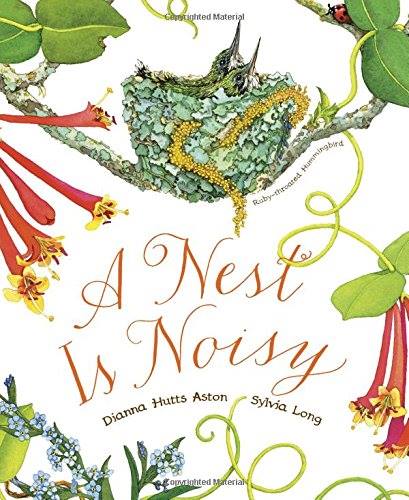
:: Books by Dianna Hutts Aston: Each book covers a certain topic (say, on eggs, nests, or rocks), and then delves deeper by exploring various aspects of the topic using beautiful illustrations by illustrator Sylvia Long. You get to learn that eggs can have different shapes, they can be clever, they can have various textures. My kids love browsing through her books!

:: Magic School Bus Books: This is by far, my eldest boy's favorite Science series! We started him on the videos (you can get the series here, or search on Youtube), and now he's been pouring over the books. Do note that the rectangular books are the original titles, and have more content compared to the square books which are based on the videos. We find the original titles hard to find in the library, so we usually purchase them from Amazon (they are a good investment as my kids keep reading them!) You can also find a lot of second-hand copies of this series (but mostly the square books) at the Evernew Bookstore at Bras Basah, where each sells for $2.90 each. Check the right-hand side table outside the store facing the library, and dig dig dig!


:: Nature Upclose series: This series by John Himmelman, is great for learning about life cycles of various animals. Each story follows the animal of interest through it's various life stages, and each page is richly illustrated. The language used is simple and text is sparse, so this series is also good for emerging readers to try their hands on!

:: Oscar the Cat series: Children learn about various aspects of Science through a series of conversations between Oscar the cat, and an animal friend. Oscar chats with a bird about electricity, or discusses how sound works with a bat, or asks a moth about light and darkness. It's a great series for introducing Science to preschoolers!

:: Books by Steve Jenkins: Steve Jenkins is a pretty prolific author and has written many books on various topics: from prehistoric creatures, colors in animals, to how animals see and deep sea creatures. I love browsing through his books, as they manage to approach each topic in a interesting manner, while peppering each page with his gorgeous illustrations. (We did some additional activities for one of his books, "The Beetle Book", which you can read about here.) 

:: One Small Square series: This series of books specifically looks at various habitats and the organisms that live in them. The illustrations are lovely, and while these are non-fiction books, I find that the information covered comes in bite-sized chunks that doesn't overwhelm the reader. Do note that these are meant for older children (Junior J is 6 and likes browsing through them).


:: Books by Nicola Davies: Nicola Davies is another author who has written various books on nature, of which we enjoy very much (I particularly liked "Outside Your Window" since it introduces nature in poetry, and the illustrations are gorgeous!). Her books cover all sorts of topics, from poop (yes poop, and this was a book that the boys were VERY interested in!), to bats and turtles.  


:: JJ's Science Adventures: My kids love this series (right now there are only two titles, you can read our review of the first book on magnets over here) for two reasons: One, the scientific concepts are told in a comic book form, two, you follow the characters through an adventure where they solve puzzles, which also teach you various science concepts (Junior J finds them very interesting!). These are also great for kids in Singapore, since each book covers the topic according to the PSLE syllabus! We had a lot of fun reading the first title and playing with magnets after, and would be sharing activities to go with the second book on heat and light soon!

~~~~~~~


To kick off the June holidays, we'll be giving away one copy of "JJ's Science Adventures: Heat and Light" to one reader of this blog! To enter in the giveaway, just follow the instructions in the Rafflecopter widget below. Don't forget to leave your name and email address in the comments section below, so that we can contact you if you win!

a Rafflecopter giveaway


Disclaimer: We received a copy of the book "JJ's Science Adventures: Heat and Light" for review purposes. Affiliate links to Amazon are included in this post. No monetary compensation was received, and all opinions are our own.

Linking up with: 

Growing with the Tans

Monday, May 11, 2015

Rave Reads: The Beetle Book


Recently, a friend helped us to purchase a pair of stick insects. We've been figuring out how to care for them (including hunting for hibiscus plants for their leaves as food), so I figured it would be a good time for us to read about insects in general. 

We started with Steve Jenkin's "The Beetle Book", with its beautiful illustrations. (You can read our mini book review of the book here.) Junior J had a great time painting some of the beetles in watercolour and drawing some using markers. 


We also made some beetles using cardboard. I helped to draw the outlines for these beetles, and the older two coloured them and added goggly eyes, and pipe-cleaners for legs and antennae. We were inspired by some of the imaginary bejeweled insects we saw at the Singapore Art Museum's Imaginarium exhibition, and added buttons to some of our beetles. For others, we added glitter glue.  

Junior J's jewel beetle (top) and Lil J's pleasing fungus beetle.

Lil J's pleasing fungus beetle on left and mottled tortoise beetle, top right. Junior J's rhinoceros beetle bottom right. 

We're quite bugged out for now, so we'll probably move on to a different topic this week!

PS: If you need ideas for butterfly crafts, check out our post here. You can get more updates on our activities via our Instagram, and if you need book recommendations, check out our Rave Reads folder!

Linking up with: 

Growing with the Tans

Thursday, April 30, 2015

Read: On process, perserverence and praise

Praising our children is a norm. We cheer the baby taking his first shaking, drunken steps. We declare our love for every painting or drawing that the six year old churns out. We push and encourage, and celebrate successes. Yet, it seems that praise may be beneficial or detrimental, depending on what kind of praise is given:

"The result plays out in children like Jonathan, who coast through the early grades under the dangerous notion that no-effort academic achievement defines them as smart or gifted. Such children hold an implicit belief that intelligence is innate and fixed, making striving to learn seem far less important than being (or looking) smart. This belief also makes them see challenges, mistakes and even the need to exert effort as threats to their ego rather than as opportunities to improve. And it causes them to lose confidence and motivation when the work is no longer easy for them. 

Praising children's innate abilities, as Jonathan's parents did, reinforces this mind-set, which can also prevent young athletes or people in the workforce and even marriages from living up to their potential. On the other hand, our studies show that teaching people to have a “growth mind-set,” which encourages a focus on “process” (consisting of personal effort and effective strategies) rather than on intelligence or talent, helps make them into high achievers in school and in life."


Focusing on growth and process makes sense. After all, not every child grows up to be a genius or prodigy. Even talent can only get you that far, and behind each genius is a  whole lot of hard work and dedication: 

"And yet research is converging on the conclusion that great accomplishment, and even what we call genius, is typically the result of years of passion and dedication and not something that flows naturally from a gift. Mozart, Edison, Curie, Darwin and Cézanne were not simply born with talent; they cultivated it through tremendous and sustained effort."

So how can we cultivate that growth mindset in ourselves and in our children? The article has various recommendations (it is a really good read and I highly recommend it!), one of which is to read and tell stories of people who have attained achievements through hard work. We've been reading more children biographies these days, and here are a few titles that might help to explore that idea more:


:: The Right Word: Roget and His Thesaurus

This beautifully illustrated book by award-winning author and illustrator Jen Bryant and Melissa Sweet (whose partnership previously produced biographical gems such as A River of Words, and A Splash of Red) tells of the story of Peter Mark Roget, the creator of Roget's Thesaurus. We follow Peter as he grows up and learns that books can be good friends, friends that don't have to be left behind if you move. We see him making lists. Lists of Latin words, of the things he learnt, of plants and insects, as he wandered through the parks of London:

"His mother complained that Peter was always scribbling. But Peter's word lists were not just scribbles. Words, Peter learnt, were powerful things. And when he put them in long, neat rows, he felt as if the world itself clicked into order."


We see Peter studying to be a doctor, and becoming a tutor as he waits to be old enough to be taken seriously as a doctor. We read about him treating the poor and sick, while working on his lists at night. We see shy Peter being able to give lectures to science societies, and still working on his Thesaurus even after it was published, so that "whenever you need it, you can still find the right word". 

What I so loved about this story of Peter Roget is being able to trace the creation of the Thesaurus as part of his life. Writing lists was his passion, but we are able to view him as a regular person: holding a job, having a family and children, working long hours at night to pursue his passion. This is definitely a book that celebrates process rather than just talent!


:: On a Beam of Light:

"The important thing is not to stop questioning. Curiosity has its own resason for exisiting." 
- Albert Einstein

And so we see little Albert as a child, not speaking much, but looking "around with his big curious eyes", as his parents worry about how their child was not like any other children. We see him asking question after question, provoking his teachers label him a disruption to the class. Who would have thought that such a child would turn out to be one of the world's most brilliant scientists? 

We read of the boy who dared to be different, who read and wondered. Who grew up wanting to teach, but having to work in a government office. Who only managed to be recognized for his great ideas when he was much older. Vladimir Radunsky's quirky sketchings go very well with this story of the man with the wild hair, who didn't like to wear socks with his shoes, and sometimes wandered about eating an ice-cream cone.


I love this book for how it shows that success sometimes does not come immediately, and how an inquiring mind is key to understanding the world around us. The book briefly introduces some of Einstein's discoveries, while focusing on his constantly working mind that puzzled over the mysteries of the universe:

"Everywhere Albert went he tried to figure out the secrets of the universe. And he never forgot about the beam of light that he rode so long ago in his imagination. Albert figured out that no person, no thing, could ever zoom through space as fast as a beam of light."

While celebrating the genius of the man, this book also reminds us that great discoveries come with time, and hard work.


:: The Iridescence of Birds:

Most picture-book biographies of artists tend to focus on the work of the artist (if you are looking for a good title in that aspect, try Matisse, the King of Colour from the Anholt Artist series). However, this story on Henri Matisse veers from the norm to focus on a bigger question:

"Why do painters what they do? Do they paint what they see or what they remember?"

This book follows the life of young Henri, and how his parents (particularly his mother) nurtured his love for colour and pattern. We see his mother filling the house with colour: painted plates on the wall, arranging fruit and flowers with little Henri, and hanging red rugs on the walls of the house. We finally see how this little boy grows up to be a great painter who painted light and movement, who painted his feelings and what he remembered in his childhood.


The text is simple and almost poetic, and I enjoyed this fresh look at the artist. I was also reminded that while talent is innate, interests and ability can be nurtured, and parents have a powerful influence on their children in that aspect. It certainly encourages me to continue to create and celebrate art in our home!

PS: We will be adding more book recommendations over in our FB folder "Rave Reads". Do like the folder to keep updated on new recommendations, since these tend not to show up in the newsfeed otherwise!

PPS: This post contains Amazon affiliate links.

Linking up with:

Growing with the Tans

Thursday, April 2, 2015

Read: Some lovely finds

It's been a long time since we've done a book review, so I thought I'd share some of our reads today. All these have two things in common: they are all beautifully illustrated (I can't resist lovely pictures!), and are books that we are currently enjoying:


Animalium: If you're teaching your kids about diversity, this is the book to read. Gorgeous illustrations introducing the various groups of the animal kingdom, this has kept Junior J engrossed for a long time.


Up in the Garden and Down in the Dirt: This is a lovely follow-up to Over and Under the Snow (we reviewed it here in our recommendations for books on winter ), which introduces children to the life they would meet in the garden, both above and below ground.


Nature Anatomy: Flipping through this is like reading an artist's journal, as he learns more about the natural world. Read about volcanoes and minerals, migration and ecosystems, all lavishly drawn. (Read a review of the book here.)

The Fairy Tales of the Brothers Grimm: I bought this more for myself than the kids, since I think they may not be ready for the full-length fairy tales. I especially loved this version: it is the most beautifully illustrated version amongst the ones I've browsed, and the stories feature illustrations from different illustrators. I'm now eyeing the other volume of Fairy Tales of Hans Christian Anderson!


Home: Home may be a nest, a house, or even a tent. This book explores the concept of home, with simple text and gorgeous illustrations. (Read a review of the book here.)


Finally, these are not books, but writing tools that the boys (and even the baby) are enjoying. These are magnatabs (click here for the range, of which many are now going at 30% off), where a child learns to write by using a magnetic pen which puts metal balls into place. It's great for kinesthetic learners, and the baby loves pushing the little balls down (these balls will not fall out so no choking hazard there). We bought the one for numbers as well as lower case letters, and thus far are getting a fair bit of mileage from them.

PS: One more thing all these books have in common: they are all now on offer on Amazon, with most having discounts of 20% or more. Speaking of which, this 4D USA History puzzle is now going at 32% off! (This post contains affiliate links.)

Linking up with:

Growing with the Tans

LinkWithin

Related Posts Plugin for WordPress, Blogger...