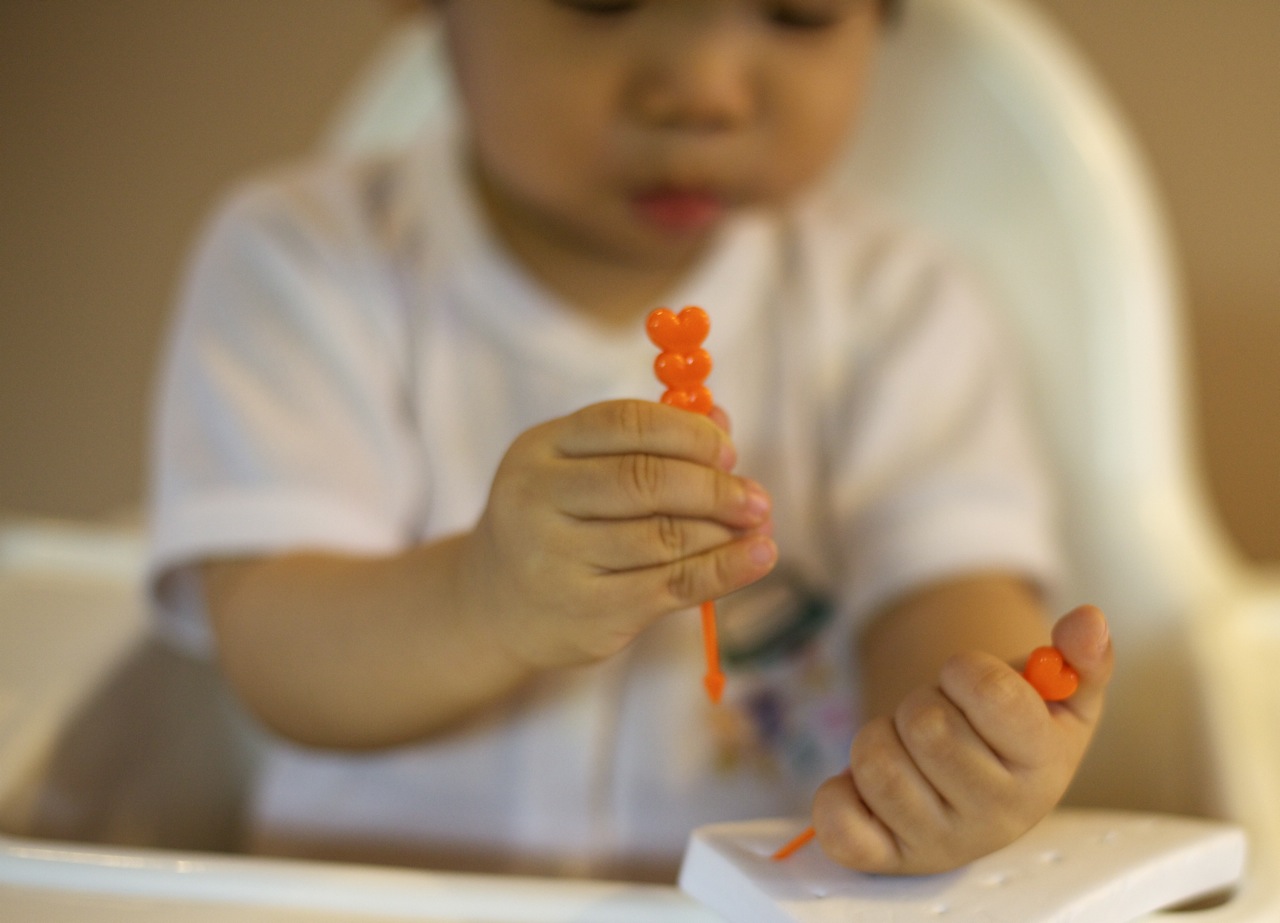
Ok, I initially wanted to upload a video of Junior J feeding himself (mainly for his grandparents in Penang), but I found out that Google Video no longer allows you to upload videos. :( I didn't want to upload it to Youtube for the whole world to see, so I've decided to just talk about something else besides the boy eating. I mean, everything's still the same (except that he can now scoop food properly): Spitting when he's bored, not eating very much, which means he's still skinny and short. So unless I find a great recipe for toddlers, or some magic method to solve all feeding problems, I'm going to move on to a happier topic: Little nature spots in the urban jungle of Singapore, that you can bring yourself (and your kids) to enjoy flora and fauna.
The number 1 spot that comes to mind right now would be my research site at Pasir Ris Park. It's this little stretch of mangrove that borders the mouth of Sungei Tampines where it empties into the sea. Its really smelly, and loads of trash gets washed up at low tide:
And it's well-known for being the dirtiest beach in Singapore, with its
water deemed not safe to swim in last year, since it contains bacteria found in faeces. Ah... so you'll ask, why bring the kids to such an icky place?
Because the reaction I see from every single visitor (adult or child) that stumbles upon that little stretch is not about how stinky it is, or how much trash there is. Its always (without fail, and I've seen a fair share of visitors) "WOW! So many crabs!" And most will then spend the next half and hour or so hanging around.
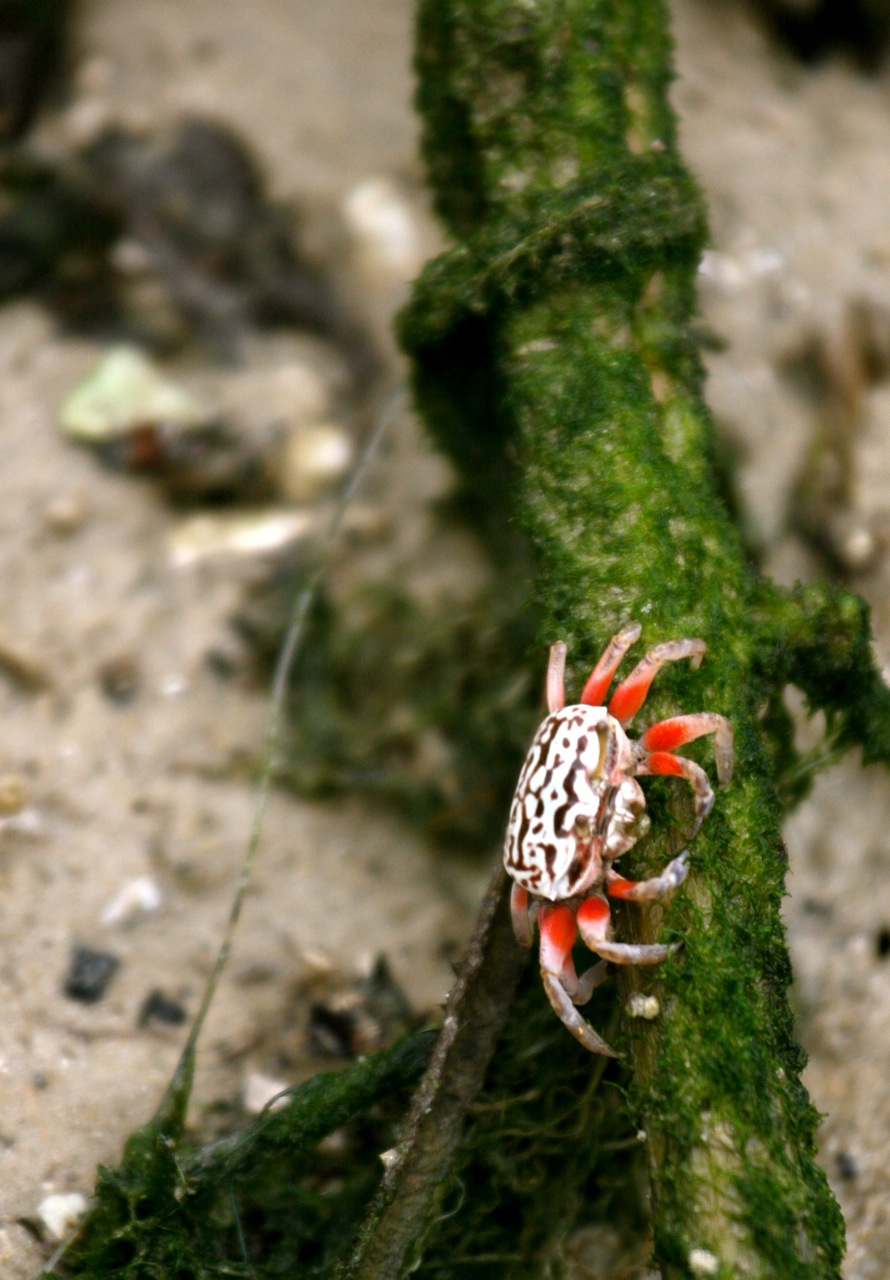
This area is teeming with hundreds and hundreds of little fiddler crabs. These little critters are quite fun to watch, since the males love to wave excitedly at the female crabs to attract their attention. How do you tell the males and females apart? No need to peek underneath, since the males have one enlarged claw (what we term a cheliped), and a smaller claw...
...While females have equal sized claws (You could impress your kids by identifying them with ease!).
The mangrove has predominantly two species of fiddlers:
Uca annulipes, which have narrower black shells (or what we term carapaces) that have white markings, and the males have an enlarged claw that is coloured orange with white tips...
and Uca vocans, which have broader grey shells, with males having an enlarged claw that is mainly orange in colour, while the upper part of the claw may be white...
So if you've booked a weekend at the Aranda Country club or the Costa Sands Resort and have nothing to do aside from watching TV, you might want to take a short walk down the park connector running alongside the country club until you hit the beach.
But before you do go there, here's a list of things to take note (this applies to any outdoor trip I guess!):
1. Do wear proper footwear (avoid slippers), and watch out for your toddlers, since there's loads of trash they could trip on...
2. Do put on sunscreen and wear a hat if you're planning to hang around for abit, and bring drinking water.
It can get really hot over at the mangroves (at 1030 hrs, the mercury can hit 34 degrees)! (BTW, the park has a mangrove boardwalk that makes for interesting walks too!)
3. Don't disturb the researchers, if there are any. They can be identified usually as they are the ones writing furiously on clipboards, or they may be armed with a video camera, or they may be mumbling away to themselves (it makes good sense to let anyone, for that matter, finish their internal conversations anyway). If there are studies being done in that area, keep a wide berth since small movements from passerbys may send the crabs scurrying for their burrows.
4. Don't catch the crabs or dig/destroy their burrows. It might a Singaporean tendency to think "food!" whenever the word "crab" comes to mind, but trust me, these little critters are way too small to eat. Plus, they may
carry flesh-eating bacteria which gets passed to you if they nip you (And trust me, nip you they will if you try to nab them. I mean, if you were a crab and someone came and grabbed you from behind, won't you nip, and nip hard?). Also, you actually need a permit from NParks if you intend to capture any of these animals. Oh, and don't try to help the researchers mentioned above to catch any too. I've had helpful adults and kids who've seen me running my experiments, and actually threw in crabs they had caught into my experiment arena, thinking they were helping... (Then, I didn't know whether to laugh or to cry. I opted to give the kids a lesson in crab behaviour instead. It's probably an occupational hazard!)
2 Uca annulipes males fighting
5. Instead of risking their fingers, encourage your kids to watch the crabs quietly (that's what enjoying nature should be about right?). Challenge them to watch the crabs and list the behaviours they can see (feeding, maintaining their burrows, fighting, waving)... that'll help to improve their observation skills as well!
6.
Update to this post: Eeek! I realized I forgot one of the most important tips of all... Check out the tide times for the day over at the
NEA website, and time your visit during
low tide. The little fellows only emerge during low tide to feed, and if you want more "entertainment", go during the evening low tides, since they wave more at females then!
7. And finally, a quote that I think more or less sums up the ideal way to respectfully approach any place of nature: "Take only pictures, and leave only footprints." :) Do bring your camera since the place sometimes does have spectacular sunrises and sunsets!
Oh, and the rest of the park's really great for cycling, roller-blading, or just long leisurely walks too.
What are your favourite nature spots that you've visited?